We present an Ernst-like formalism for stationary and axisymmetric Einstein–Maxwell/ModMax gravity coupled to a scalar field. The Maxwell sector is recovered as a particular limit of the ModMax theory, allowing both theories to be studied within the same framework.
Gr@v member Héctor Olivares has been awarded a Mexican Diaspora Research Chair ("Cátedras de la Diáspora Mexicana"), a grant supporting Mexican researchers living abroad who wish to maintain academic links with Mexico. The initiative provides annual mobility support for research, teaching, and academic training activities at Mexican higher education institutions and public research centers.
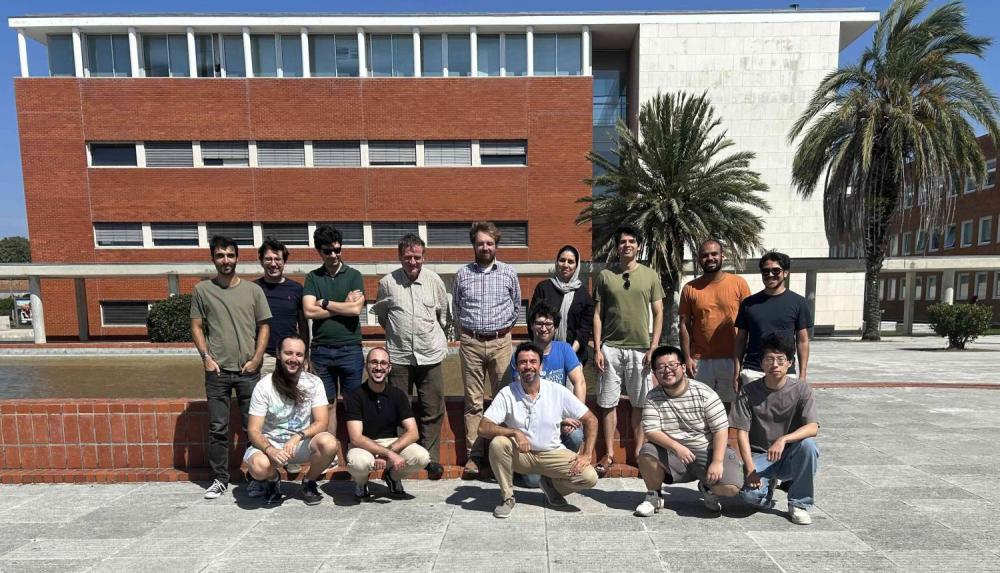
On 16 September 2026, Gr@v resumed its scientific activities with the first Journal Club of the new term. We are delighted to welcome several visitors to the group, including Alvaro Salazar (Valladolid, Spain), Kelvin Alves (UNESP, Brazil), Flavio Rosales Infante (UMSNH, Mexico), and Razieh Ranjbar (Institute for Research in Fundamental Sciences, Iran). We are also very happy to welcome our new PhD student, Yusheng He, who joins us after graduating in China. It is great to see the group growing and our scientific activities getting underway again.
The II Workshop on Fundamental Fields and Compact Objects, integrated in the NewFunFiCO network, will be held in person at the Institute of Physical Sciences, UNAM-Morelos, Mexico, 17–19 November 2026. More info here.
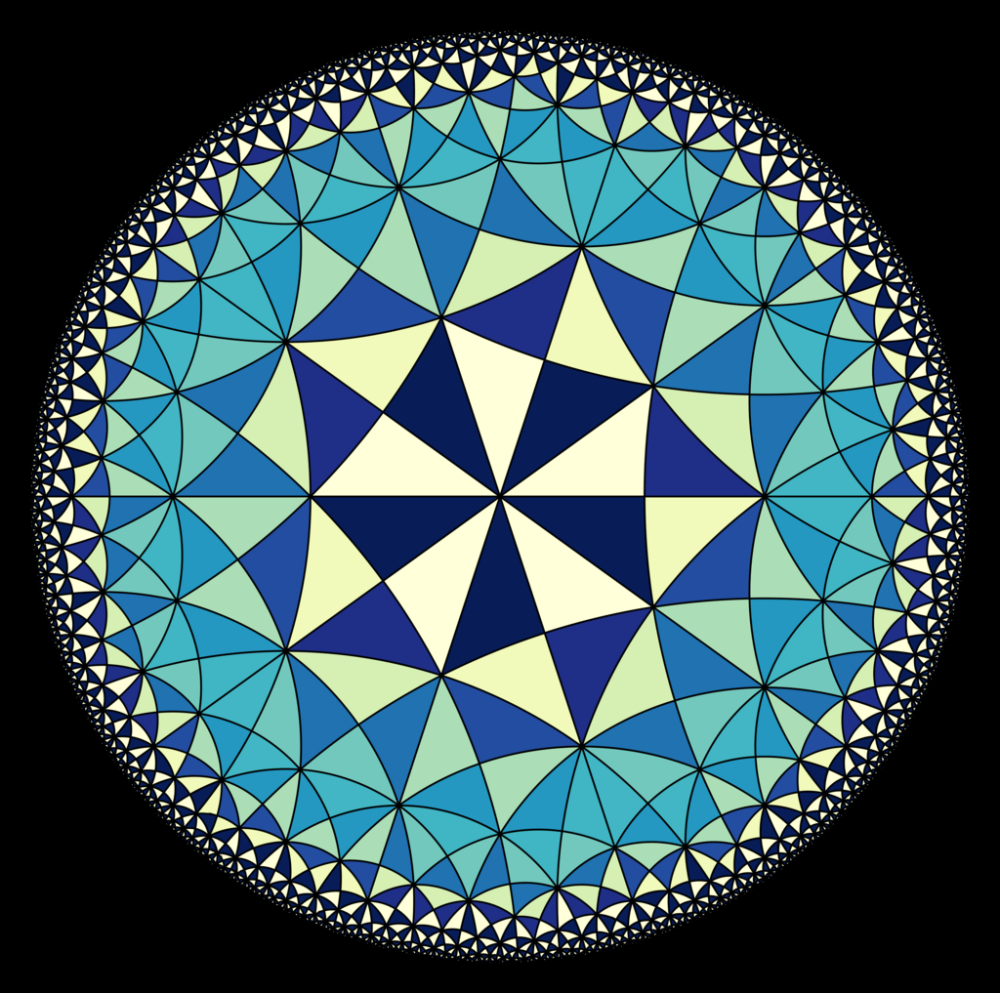
Former Gr@v member Raimon Luna developed a project to visualize many mathematical and physical concepts through images and animations fully generated by short Python scripts.
Each picture is supposed to introduce a different idea in mathematics or physics in a visually appealing way, without the use of any text or numbers. For those of us who tend to have a visual understanding of these abstract topics, including the author, the pictures can be a nice way to get a different intuition on them.
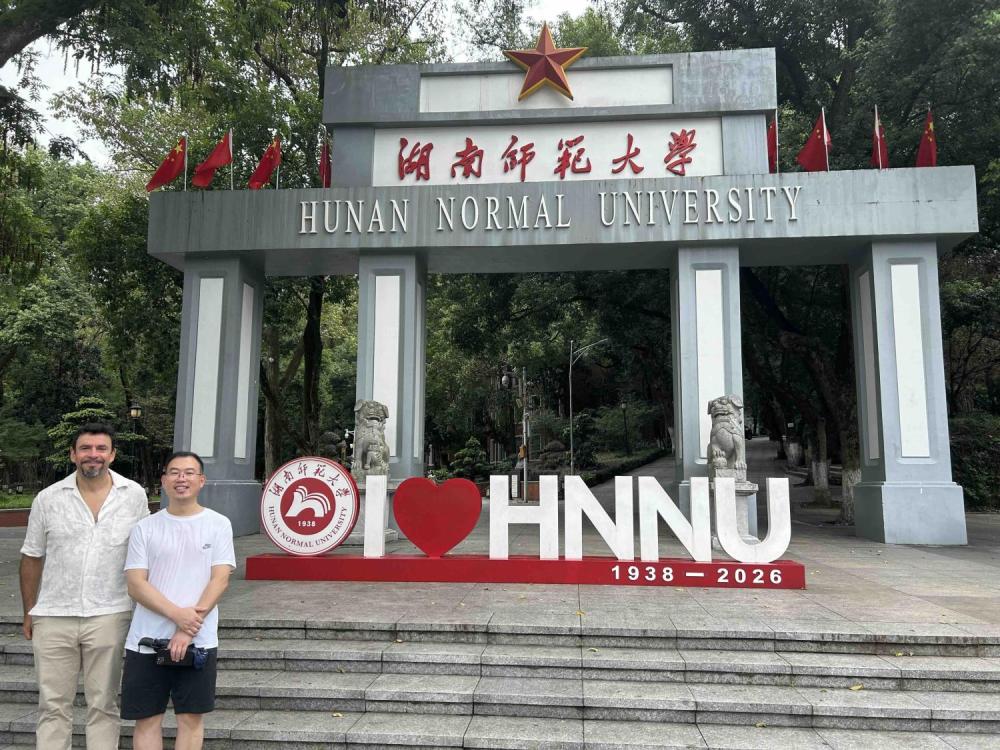
C. Herdeiro visited Hunan Normal University for two weeks in August-September 2026, where he gave a lecture course on Gravitating Solitons and Hairy Black holes. During the visit it was also possible to interact with collegues from Jianxi Normal University. Many thanks to Mengjie Wang and the whole group at HNU, led by Prof. Jiliang Jing, as well as to Hyat Huang and the whole group in JNU, for a wonderful hosting and great scientific interactions in Changsha and Nanchang.
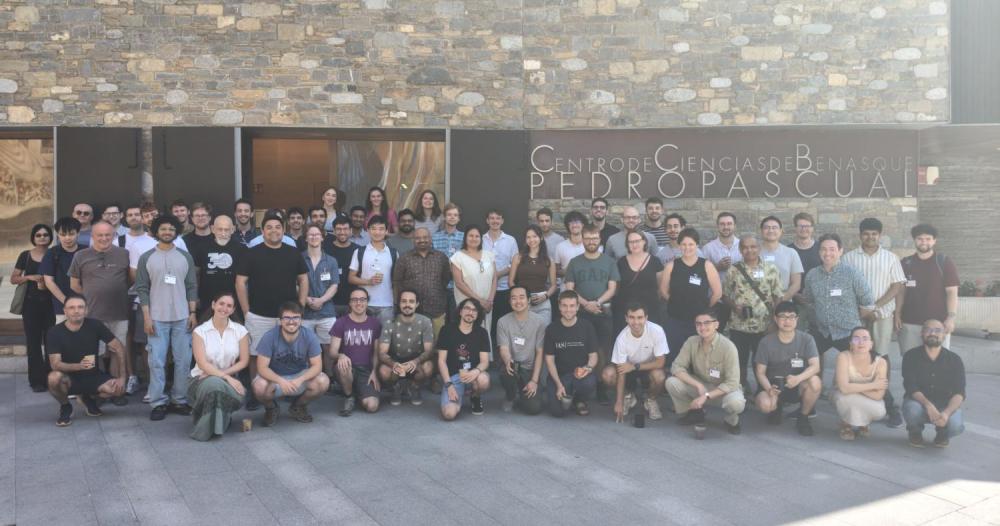
Gr@v students M. Brito, J. Ferreira and M. Mariano were amongst the participants of the New Frontiers in Strong Gravity meeting in Benasque, in July 2026.
Our group coordinated the "Numerical Relativity and High Energy Physics" IRSES network (2012-2015). Here is a list of the global network meetings organized: