
Strong Gravity News & Events
Jorge Delgado is now a Master
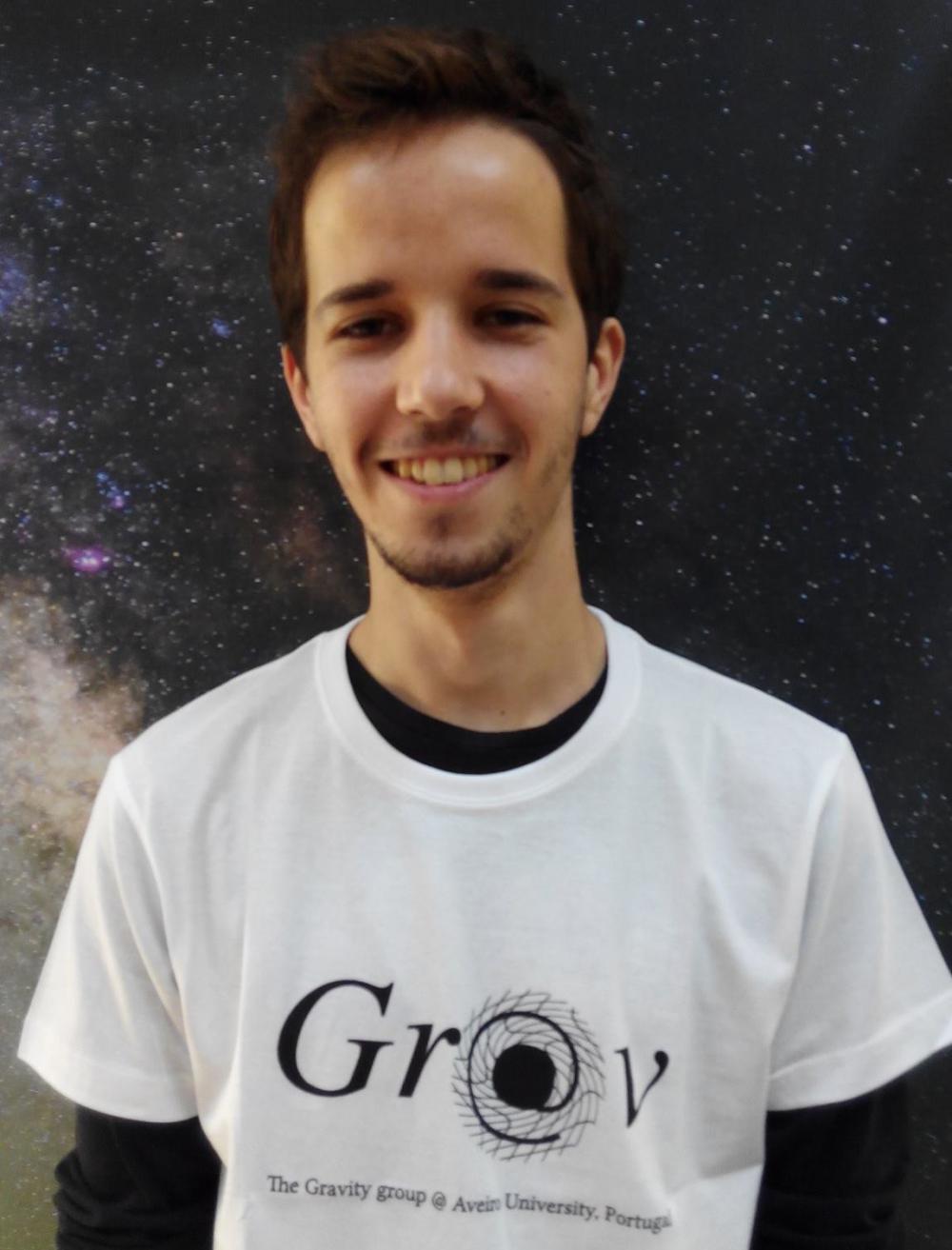
Jorge Delgado successfully finished his Physics M.Sc. at Aveiro University, on September 20th 2016, by defending a thesis with title "Kerr black holes with electric charge and scalar hair". This thesis was supervised by Gr@v researchers and examined by Prof. Filipe Mena, from the University of Minho. Well done Jorge!
GR21 award for Gr@v PhD student
Gr@v's PhD student Helgi Runarsson was awarded a Hartle Award for the best talk by a student in his GR21 session (A1). The award consists of a small money prize, a 3-year membership in the International Society on General Relativity and Gravitation, and a certificate.
Física 2016
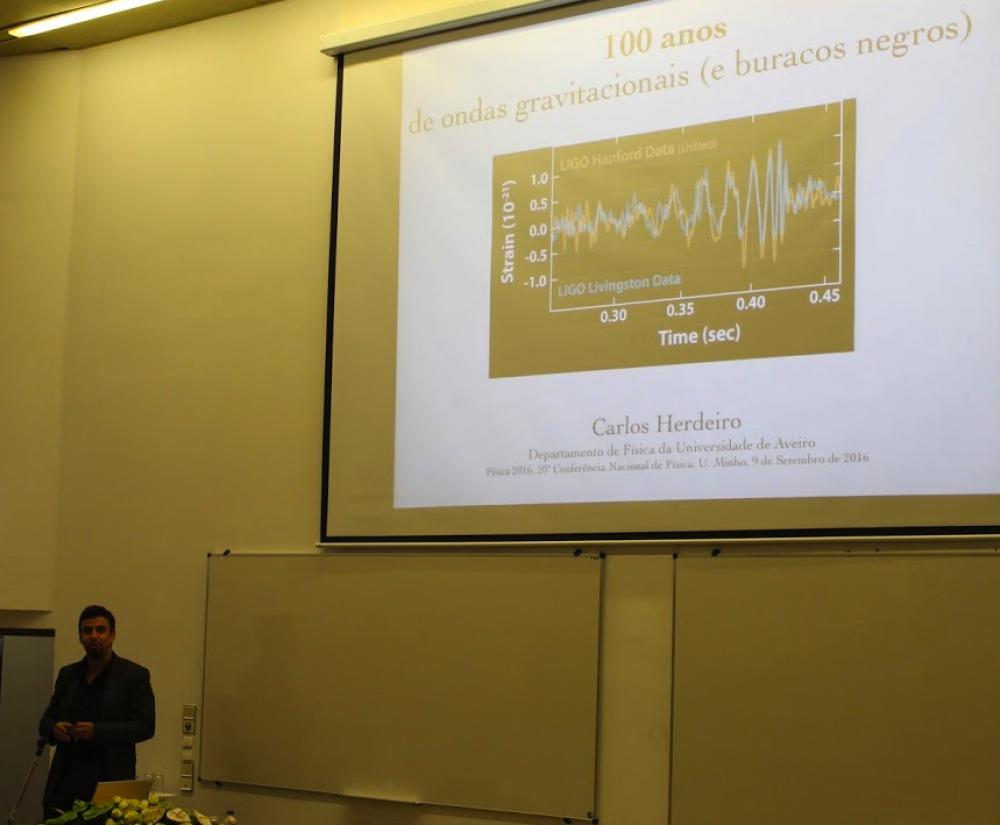
The 20th National Meeting of the Portuguese Physics Society (SPF) took place at the University of Minho, in Braga, in the 8-9 September 2016. Gr@v member C. Herdeiro was one of the invited plenary speakers.
At the dawn of a new era in astrophysics: Gravitational waves have arrived
Speaker
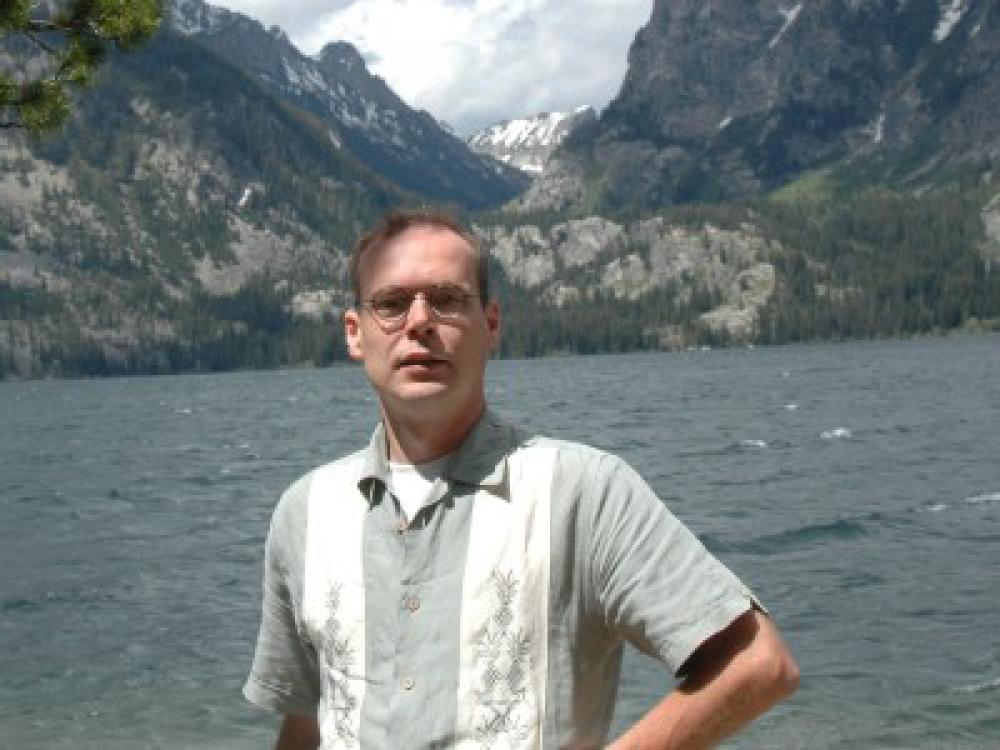
Ulrich Sperhake (Cambridge U.)
Event date
Venue
Physics Amphitheatre
Event type
Abstract: On 14 September 2016, the Laser Interferometer Gravitational-WaveObservatory (LIGO) detected the first gravitational wave signal everdirectly observed. This observation also represents the first directobservation of a black-hole binary and has opened up a qualitatively newwindow to the universe.
Gravitational Lensing and BH Shadows Workshop
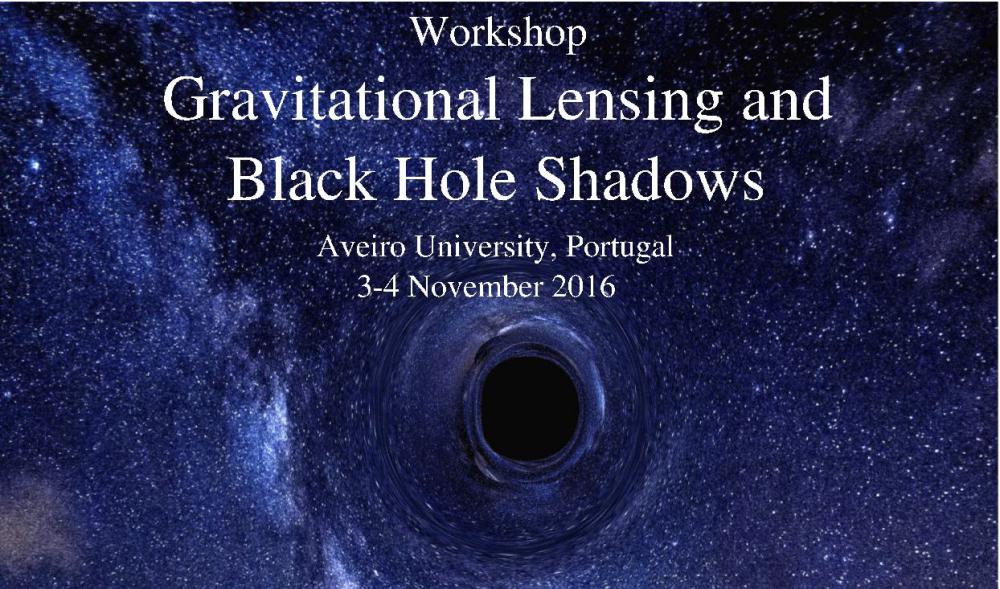
In the wake of the detection of gravitational waves from black hole mergers and at the door step of an era of precision electromagnetic observations of the horizon scale for black hole candidates, in particular with the Event Horizon Telescope, the gravitation groups at Aveiro University, Gr@v, and at IST-Lisbon, Grit, will organize a two days workshop on Gravitational Lensing and Black Hole Shadows, held at the University of Aveiro (Portugal), on the 3rd and 4th of November 2016.
Quantum Aspects of Black Holes - Yerevan 2016
The workshop on "Quantum Aspects of Black Holes and its Recent Progress", held in Yerevan, Armenia, 25-27 August 2016, with partial support from ICTP, had as an invited speaker Gr@v member C. Herdeiro.
Classical and Quantum Gravity highlights 2015
The paper "Testing General Relativity with past and present Astrophysical Observations" co-authored by several Gr@v members, is one of CQG's highlights for 2015.
Baikal School 2016
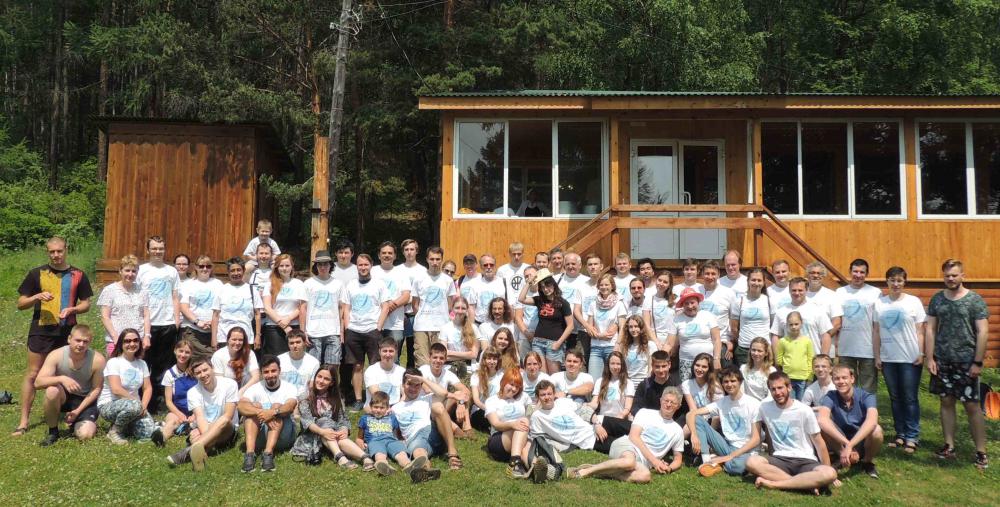
Carlos Herdeiro was one of the invited lecturers of the 16th International Baikal Summer School on HEP and Astrophysics, in Siberia, Russia.
2016 National Meeting of Astronomy and Astrophysics
Event date
Venue
Physics Amphitheatre
Ends on
Event Website
Event type
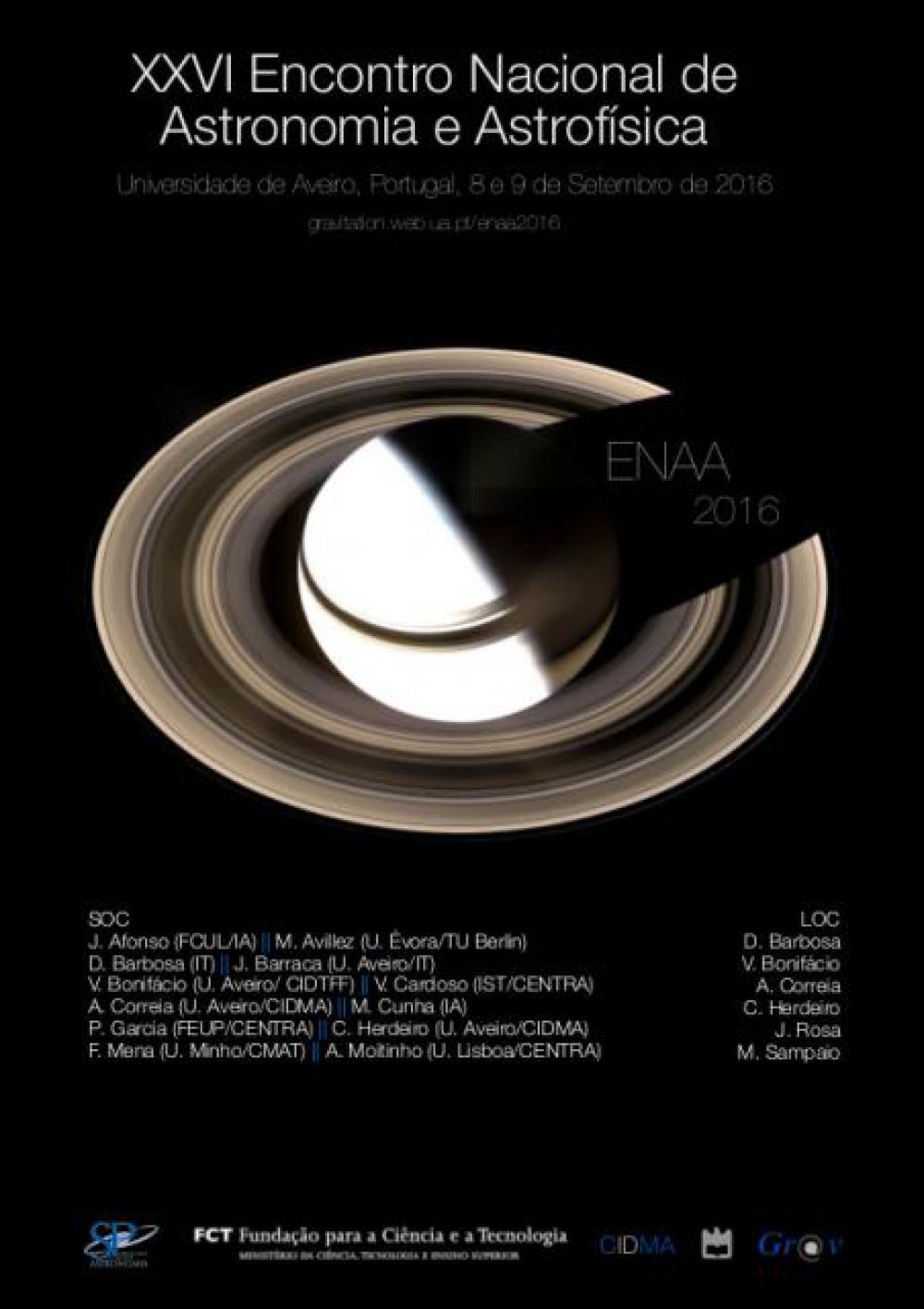
The XXVI National Meeting of Astronomy and Astrophysics will take place at the University of Aveiro, on the 8th and 9th September 2016. This meeting is organized by the Department of Physics of the University of Aveiro and the Center for Research and Development in Mathematics and Applications (CIDMA), in partnership with the Portuguese Astronomy Society (SPA).