Abstract: Active galactic nuclei (AGNs) are extreme astrophysical environment that result in copious emission of X-rays. I describe how large archival datasets from X-ray telescopes can be used to search for new physics using the X-ray spectrum of AGNs.
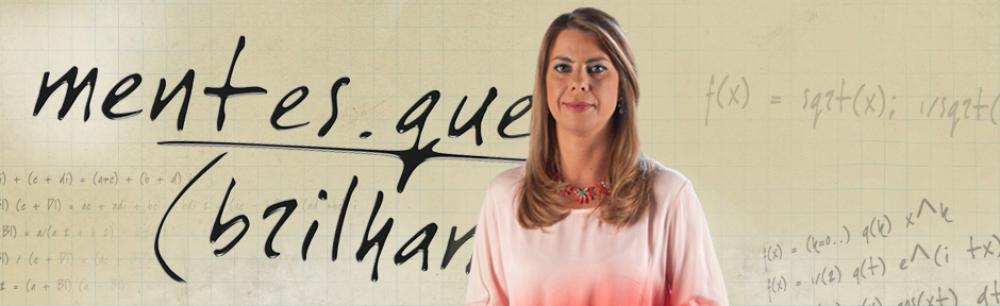
For the second time C. Herdeiro was the guest interviewee of Porto Canal's "Mentes que Brilham". Watch and listen to the conversation (from minute 18 onwards) (Watch and listen to the first interview) with interviewer Cláudia Fonseca about black holes and some of the research work made at Gr@v in this area.
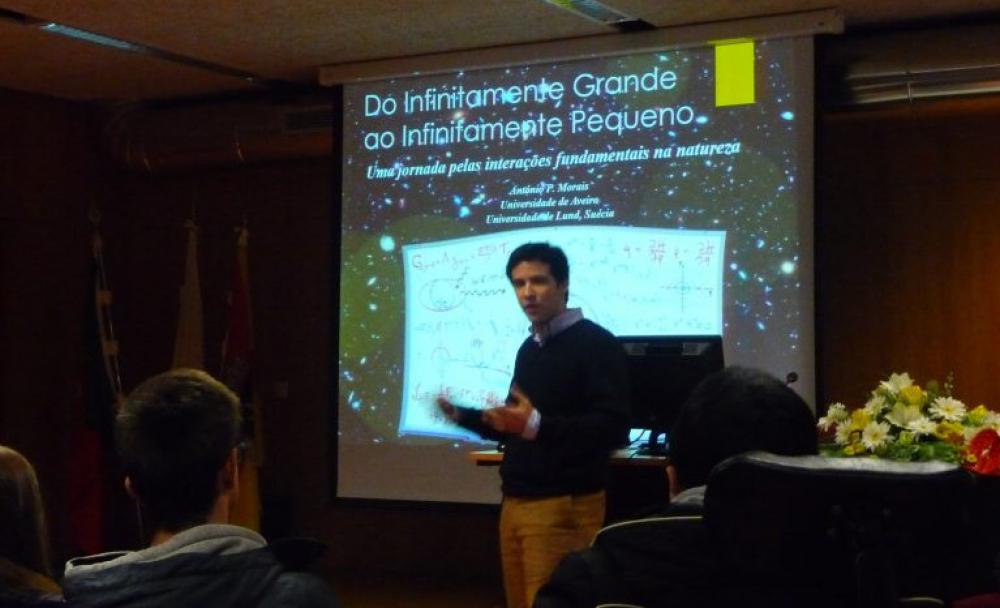
Gr@v member António P. Morais gave a talk at Escola Secundária José Régio in Vila do Conde with title "Do Infinitamente Grande ao Infinitamente Pequeno - uma jornada pelas interações fundamentais na natureza". António was an invited speaker to participate in a sequence of seminars entitled "A Biblioteca convida...", and presented to 11th and 12th grade Science and Technology students the four fundamental interactions in nature and how have they shaped our Universe.
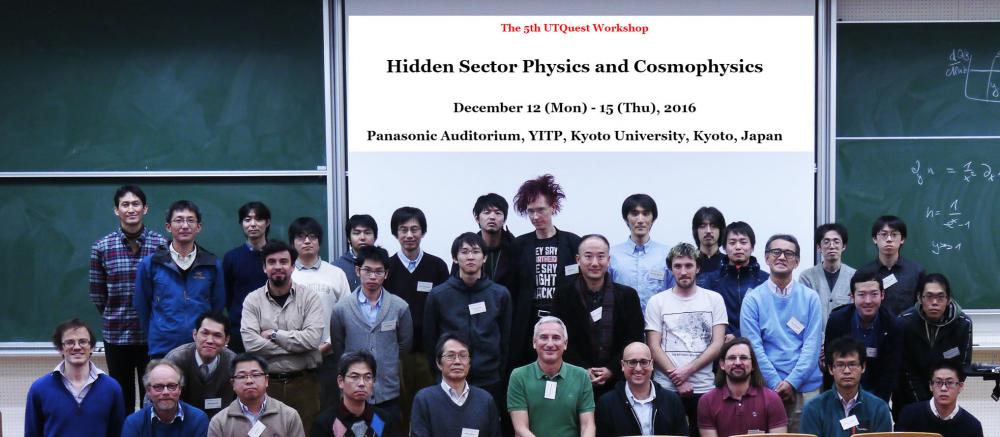
Gr@v member Carlos Herdeiro was one of the invited speakers of the 5th UTQuest workshop, with the theme "Hidden Sector Physics and Cosmophysics", that took place at the Yukawa Insitute for Theoretical Physics, Kyoto University, Kyoto, Japan.
Abstract: Compact objects in general and neutron stars (NSs) in particular open a window to some of the most extreme physics we can find in nature. On the one hand in the interior of NSs we can find matter in very extreme densities, exceeding nuclear densities and anything we can probe in the laboratory, while on the other hand NSs are related to the strongest gravitational fields next only to those found in black holes. Therefore studying NSs gives us access to both supranuclear densities and strong gravity and can be used to get information and test our theories of matter (equation of state) and gravity. The properties of the structure of NSs are encoded on the spacetime around them and by studying the astrophysical processes that take place around NSs we can map that spacetime.Here we will talk about the properties of NS structure and how they are related to the properties of the spacetime around them. We will also talk about the relation of these properties to astrophysical observables. Finally we will extend our discussion to the case of scalar-tensor theory of gravity.
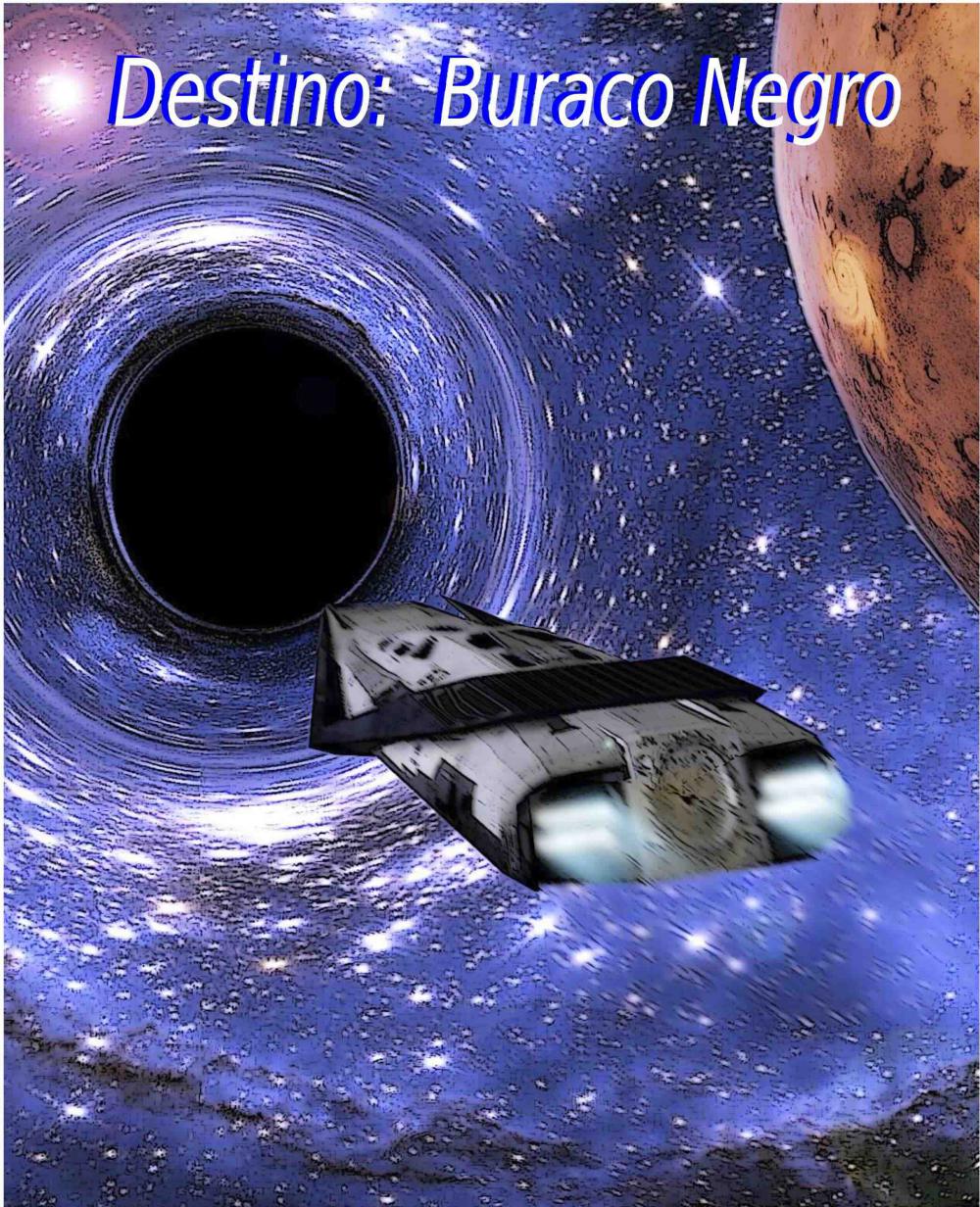
Gr@v's Ph.D. student (in collaboration with IST-Lisbon) Pedro Cunha produced a short movie illustrating a voyage into a black hole, and in particular the lensing effects visualized by an observer undergoing such journey. The journalist Catarina Lázaro (voice) and Gr@v researcher C. Herdeiro (scientific advising) collaborated in the movie, which will have a premiere on December 3rd 2016 at "Observatório Geofísico e Astronómico da Universidade de Coimbra".
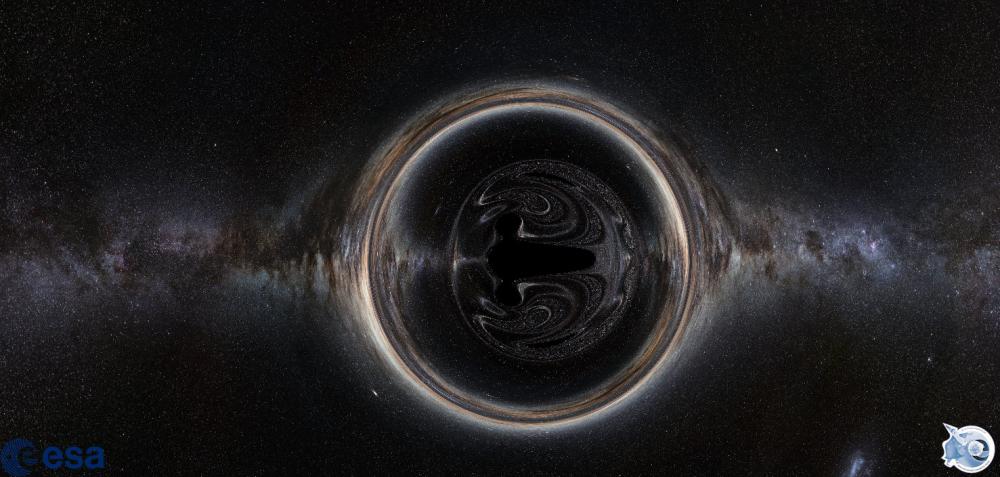
The European Space Agency (ESA) Advanced Concepts Team (ACT) has created a cool interactive webpage for visualization of the lensing due to a black hole, featuring black holes with scalar hair found by our group. Try it here! (Works better with the Chrome browser)
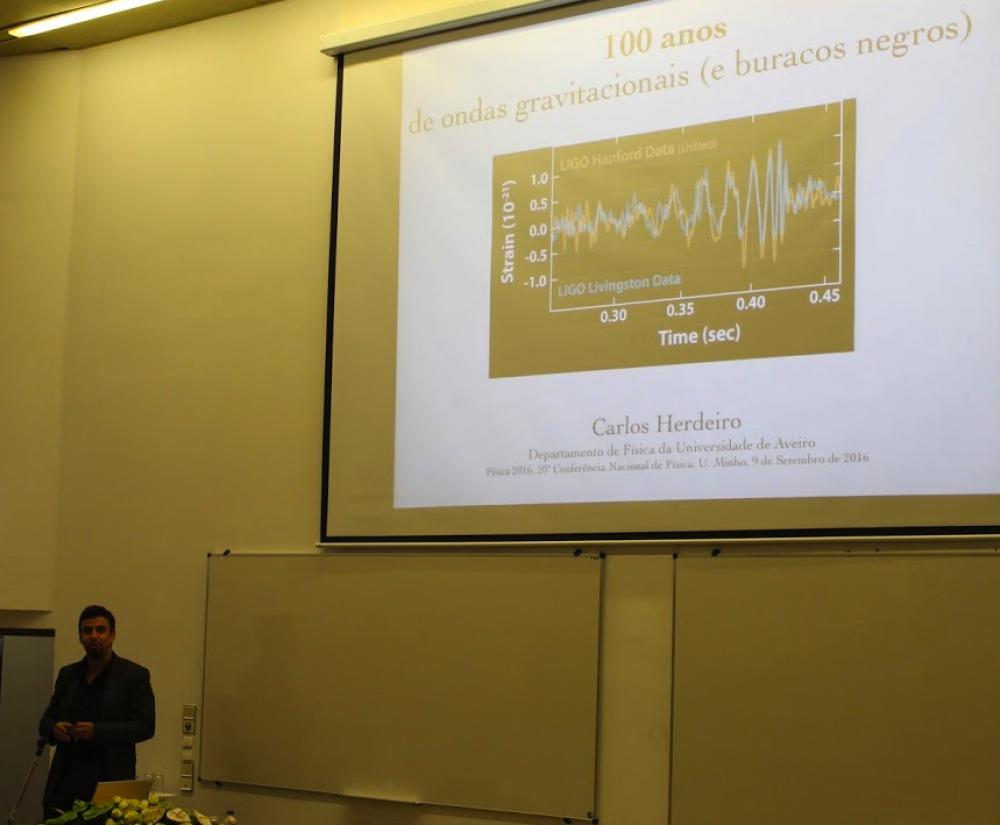
Abstract: On 14 September 2016, the Laser Interferometer Gravitational-WaveObservatory (LIGO) detected the first gravitational wave signal everdirectly observed. This observation also represents the first directobservation of a black-hole binary and has opened up a qualitatively newwindow to the universe.
Our group coordinated the "Numerical Relativity and High Energy Physics" IRSES network (2012-2015). Here is a list of the global network meetings organized: