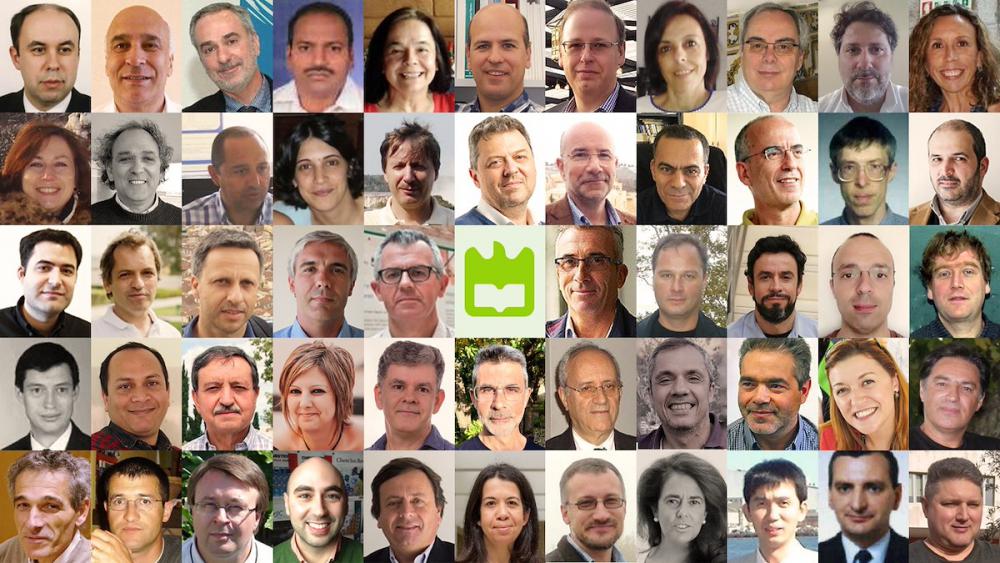
The Portuguese Science Foundation (FCT) announced the 5th edition of the individual call to scientific employment stimulus, open from February 3rd 2022 to March 3rd 2022, for researchers with a Ph.D. and including four different seniority levels. Applications require the support of a host research unit. Researchers wishing to join our group should contact the group coordinator (C. Herdeiro).
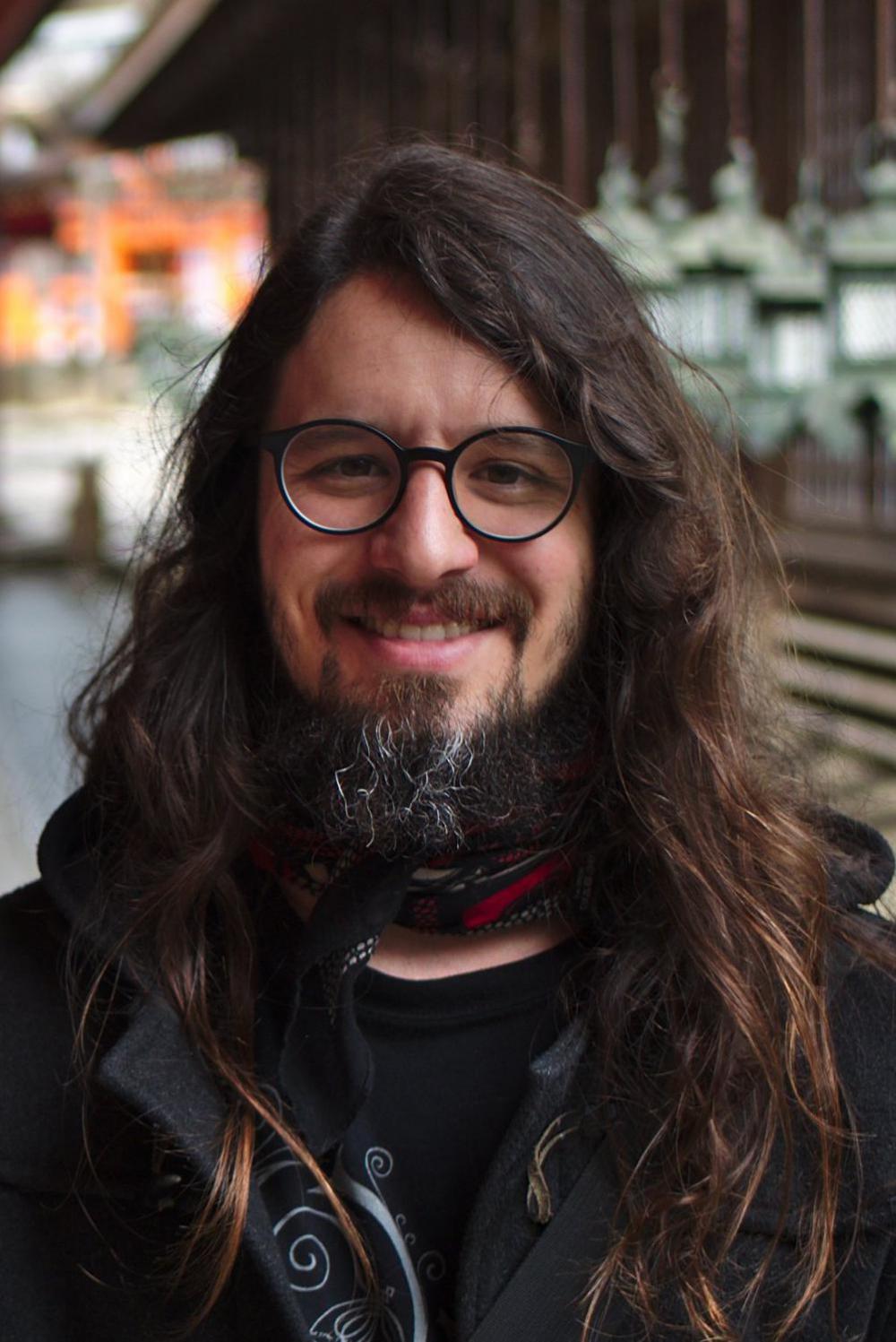
Miguel Zilhão joins Gr@v from January 1st 2022 under a two-years research position. Miguel is an expert on strong gravity, in particular in numerical relativity, a technique he has applied in multiple contexts, ranging from astrophysics to AdS/CFT. He was a former Ph.D. student in Porto University and Gr@v (graduated in 2012) and since then has been a researcher at Rochester Institute of Technology (USA), University of Barcelona (Spain) and IST-Lisbon. Welcome Miguel!
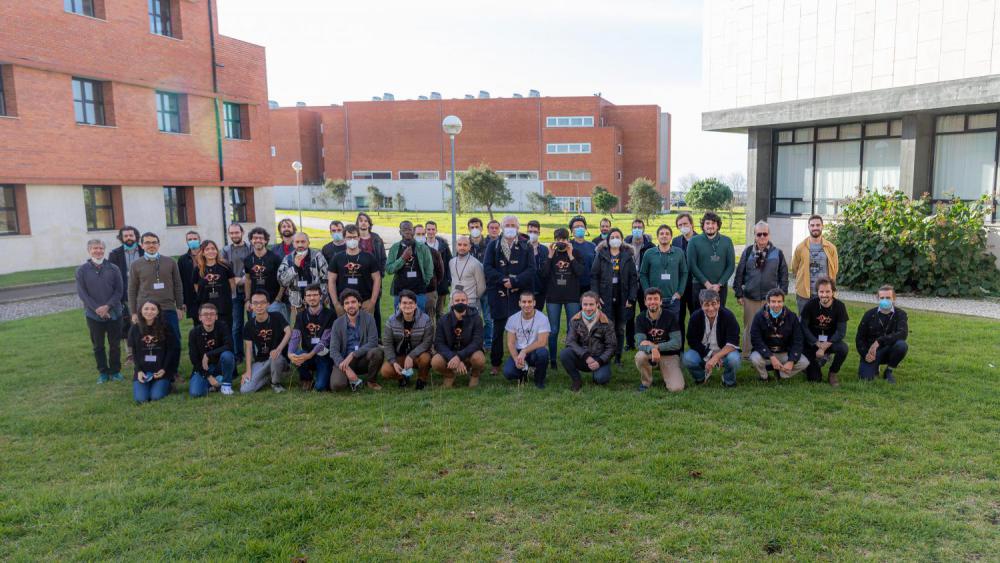
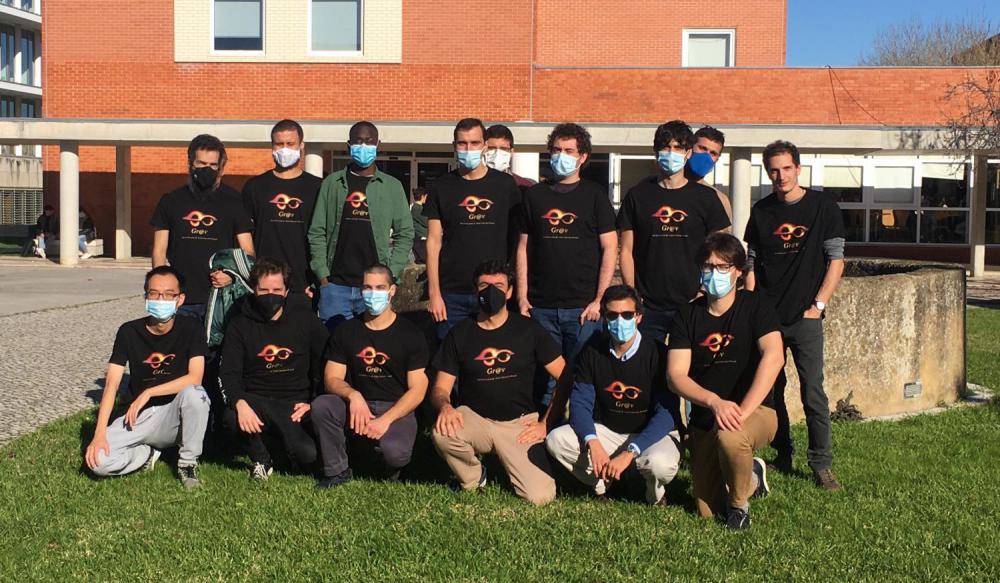
The XIV Black Holes Workshop took place at the University of Aveiro, on 20-21 December 2021, organized by our group, gathering more than 80 researchers to discuss the (astro)physics and mathematics of black holes. It was really great to have a real face to face meeting, even if we could only take off the mask (momentarily) for the group photo. Thank you to all participants!
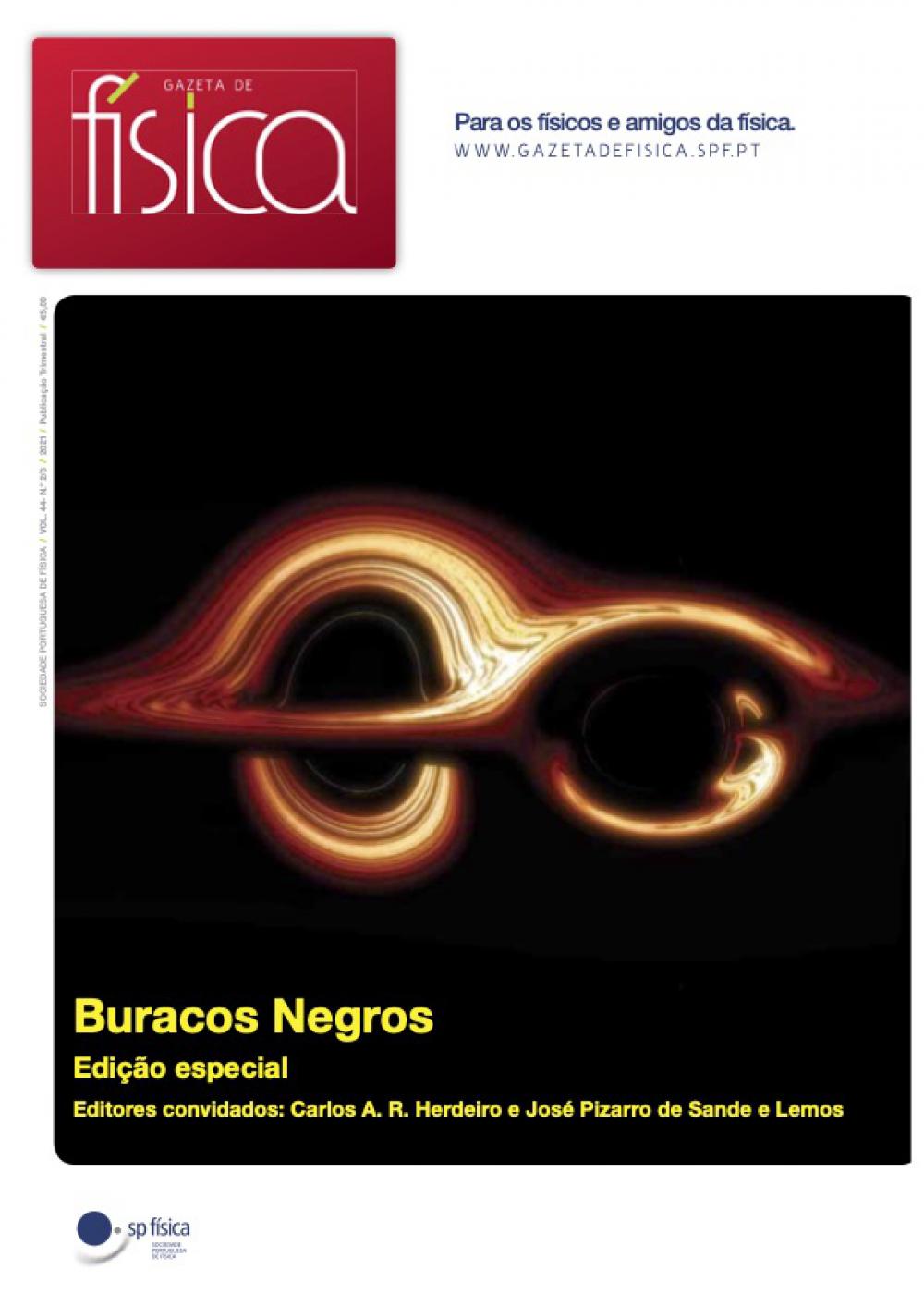
Gazeta de Física, the Bulletin of the Portuguese Physics Society, has devoted a special issue to Black Holes, with guest editors. C. Herdeiro and J. S. Lemos, featuring 12 papers from scientists working in Portugal on this exciting and timely topic.
We establish that boundary degrees of freedom associated with a generic co-dimension one null surface in D dimensional pure Einstein gravity naturally admit a thermodynamical description. We expect the null surface thermodynamics to universally follow as a result of the diffeomorphism invariance of the theory, not relying on other special features of the null surface.
Our group coordinated the "Numerical Relativity and High Energy Physics" IRSES network (2012-2015). Here is a list of the global network meetings organized: