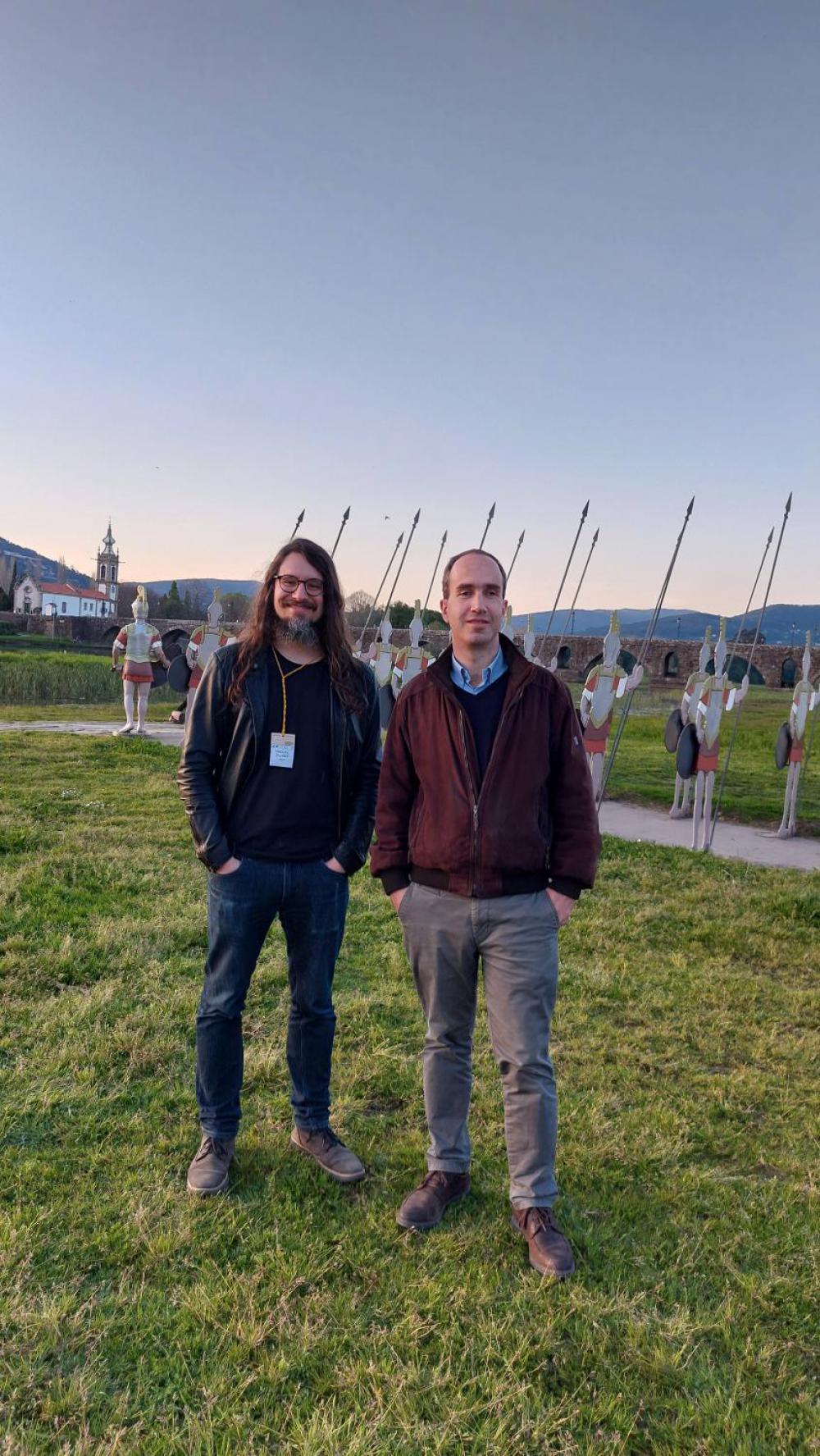
In this talk, I will give an overview of how to do field-level likelihood-free inference with galaxy catalogs.
More specifically, only using phase-space information, I will show how to convert galaxy catalogs into graphs.
I will explain how to use graph neural networks, associated with moment neural networks, to constrain Omega matter.
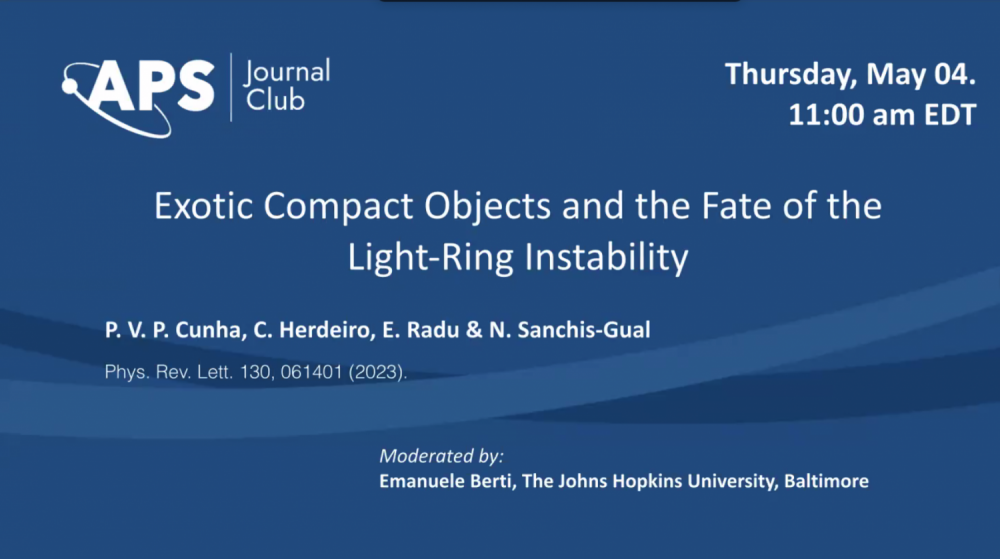
American Physical Society invited the authors of the paper "Exotic Compact Objects and the fate of the light ring instability" to participate in the APS Journal Club (JC), dedicated to selected papers published in Physical Review Letters. It was the first time this JC was dedicated to a gravity paper. The video recording of the session will be found in the JC webpage.
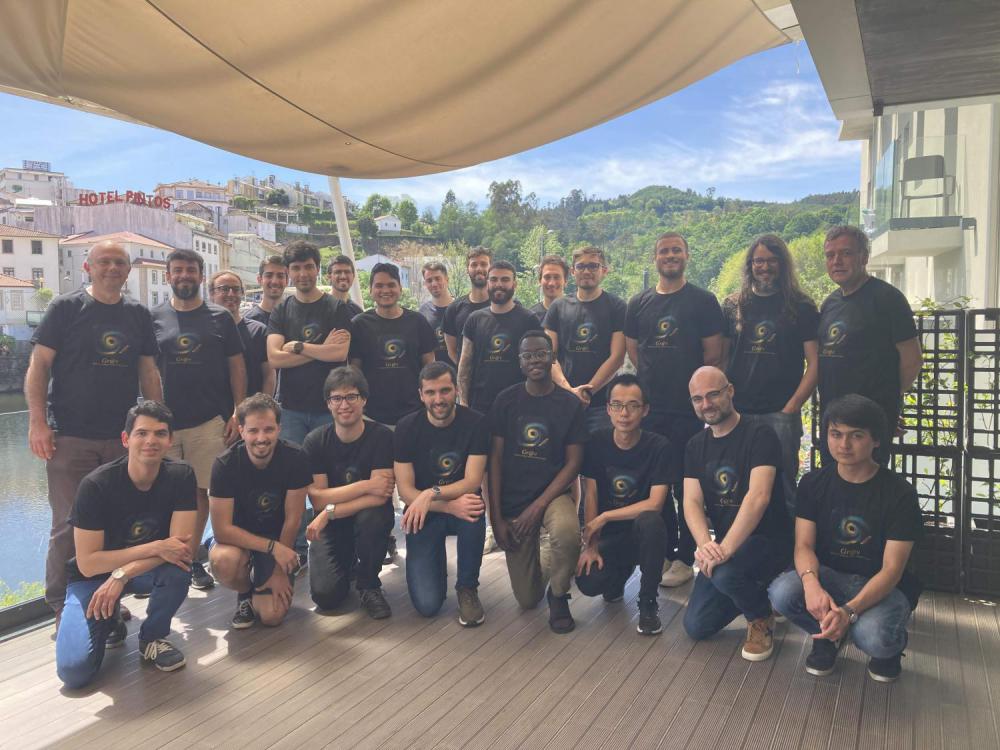
Our group organized the "State of the art techniques in Strong Gravity" Meeting, in São Pedro do Sul 26-28 April 2023 as a retreat type meeting to exchange ideas. The inspiring discussions will certainly foster new research!
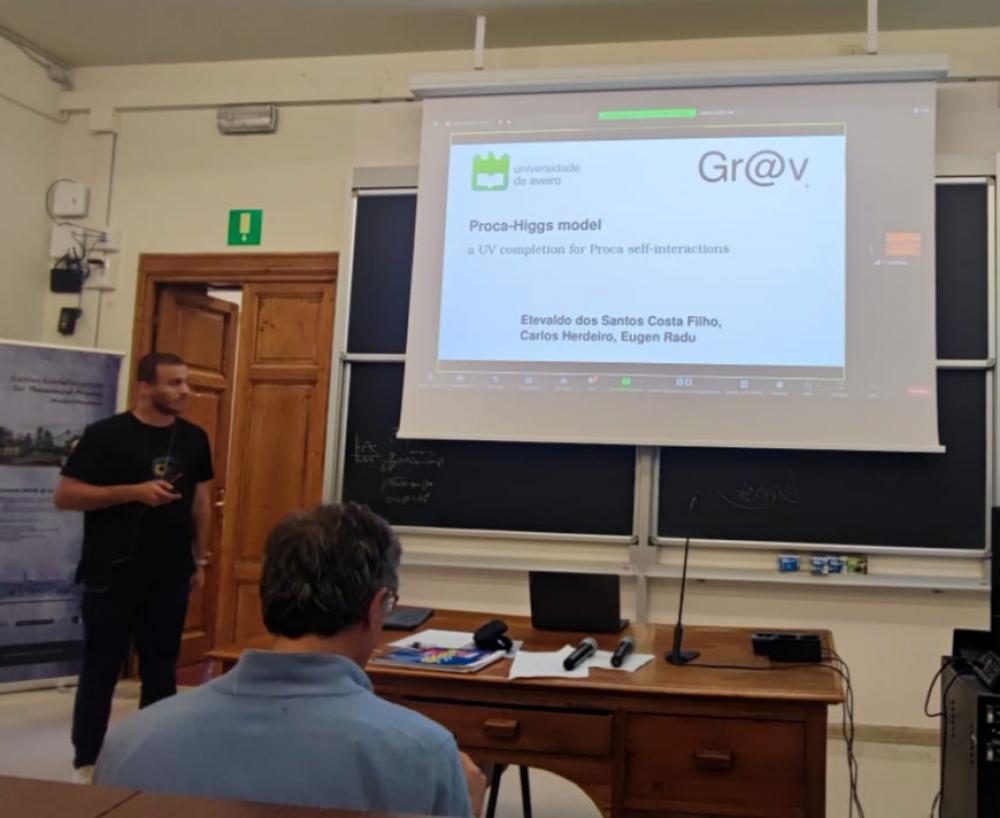
Gr@v Ph.D. student E. Costa presented a seminar on the "Proca-Higgs model" in the Mini-Workshop "New Horizons for Horizonless Physics" at the Galileo Galilei Institute in Florence, Italy.
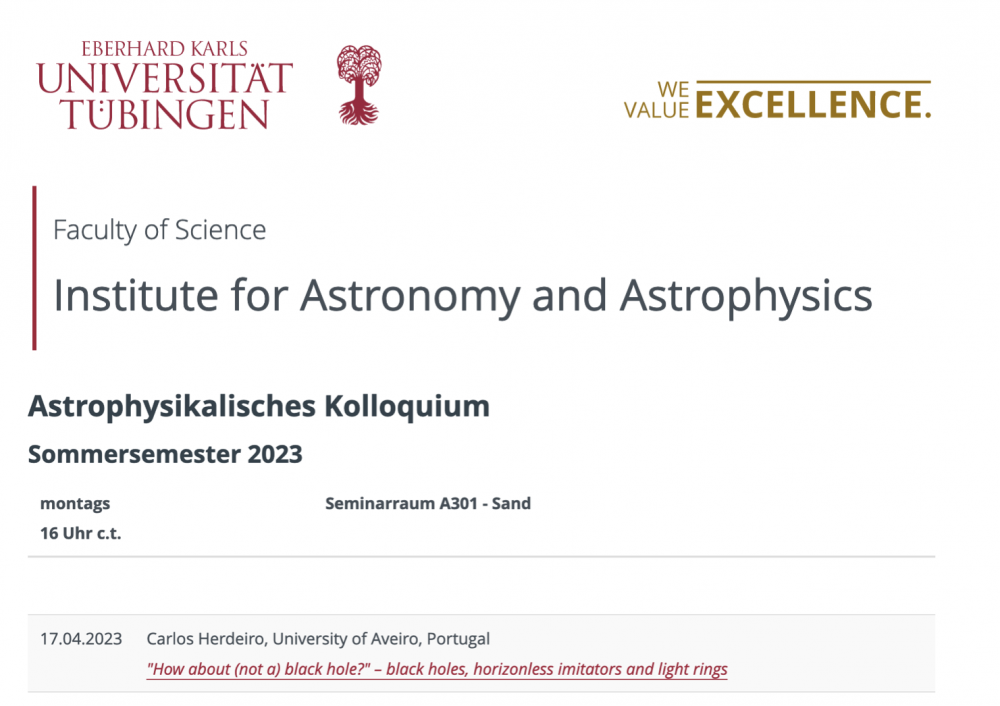
C. Herdeiro presented an invited colloquium at the U. Tubingen. Thank you to D. Doneva and the whole group for the warm and scientifically stimulating hospitality!
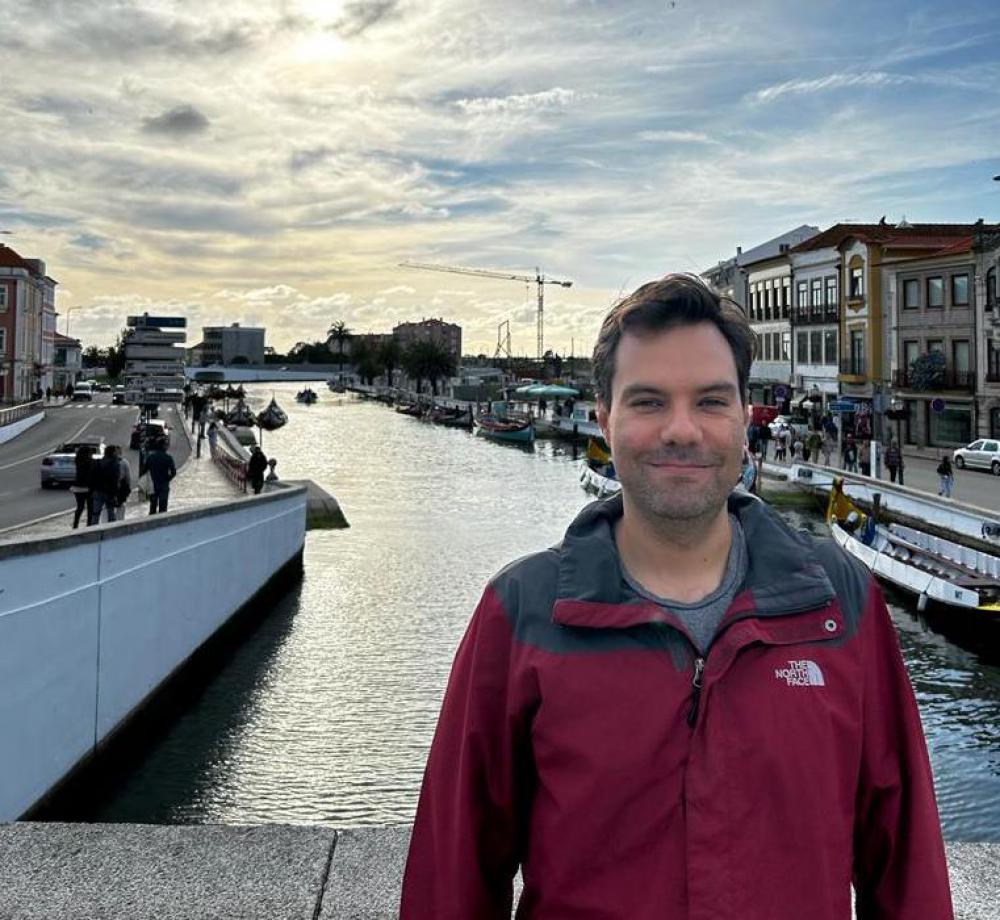
Prof. Maurício Richartz, from ABC Federal University, State of São Paulo, Brazil, visited Gr@v in March-April 2023, to discuss analogue models of gravity and other topics. Thank you for your visit Maurício and see you soon!
The next decade will see an overwhelming number of cosmological surveys coming online. The Square Kilometre Array Observatory (SKAO) will, among several other science cases, map the distribution of cold neutral Hydrogen in the Universe using its spin-flip transition emission line at rest of 21cm or 1.4GHz and a novel technique called Intensity Mapping (IM).
Our group coordinated the "Numerical Relativity and High Energy Physics" IRSES network (2012-2015). Here is a list of the global network meetings organized: