Two-loop stability of a complex singlet extended Standard Model
Speaker
António Morais
Event date
Venue
GAP room
Event type

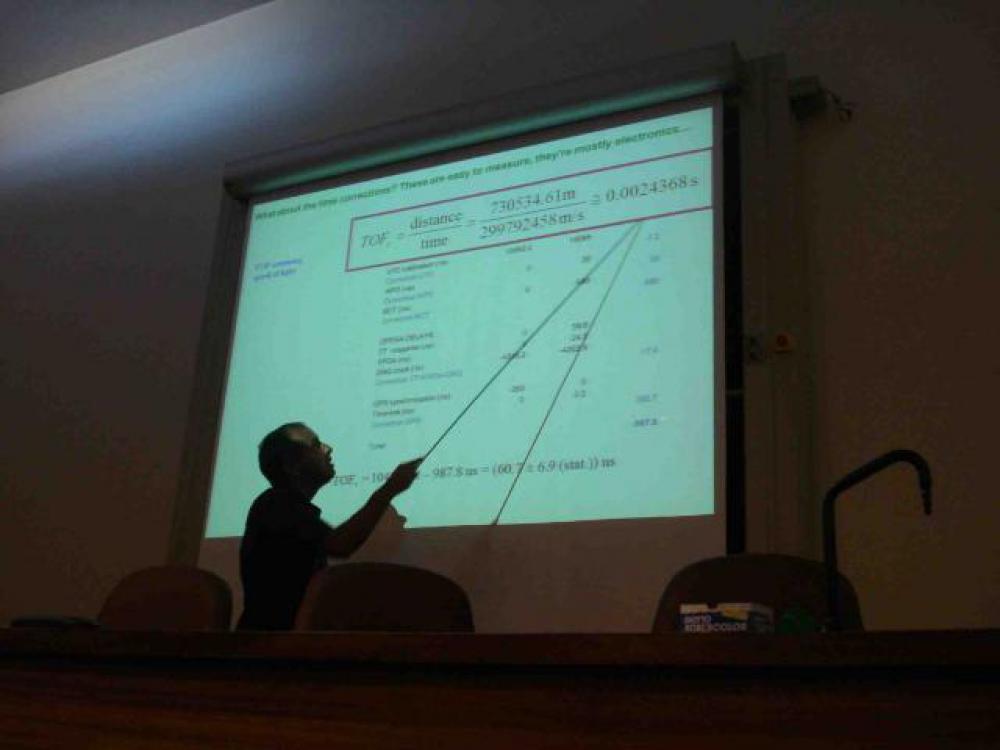
Abstract: The discovery of the Higgs boson and the subsequent award of the Nobel Prize completes the Standard Model of Particle Physics. However, the Standard Model is not a complete description of fundamental physics and leaves many questions unanswered. In this colloquium I will give an overview of the Standard Model and discuss its flaws and omissions.
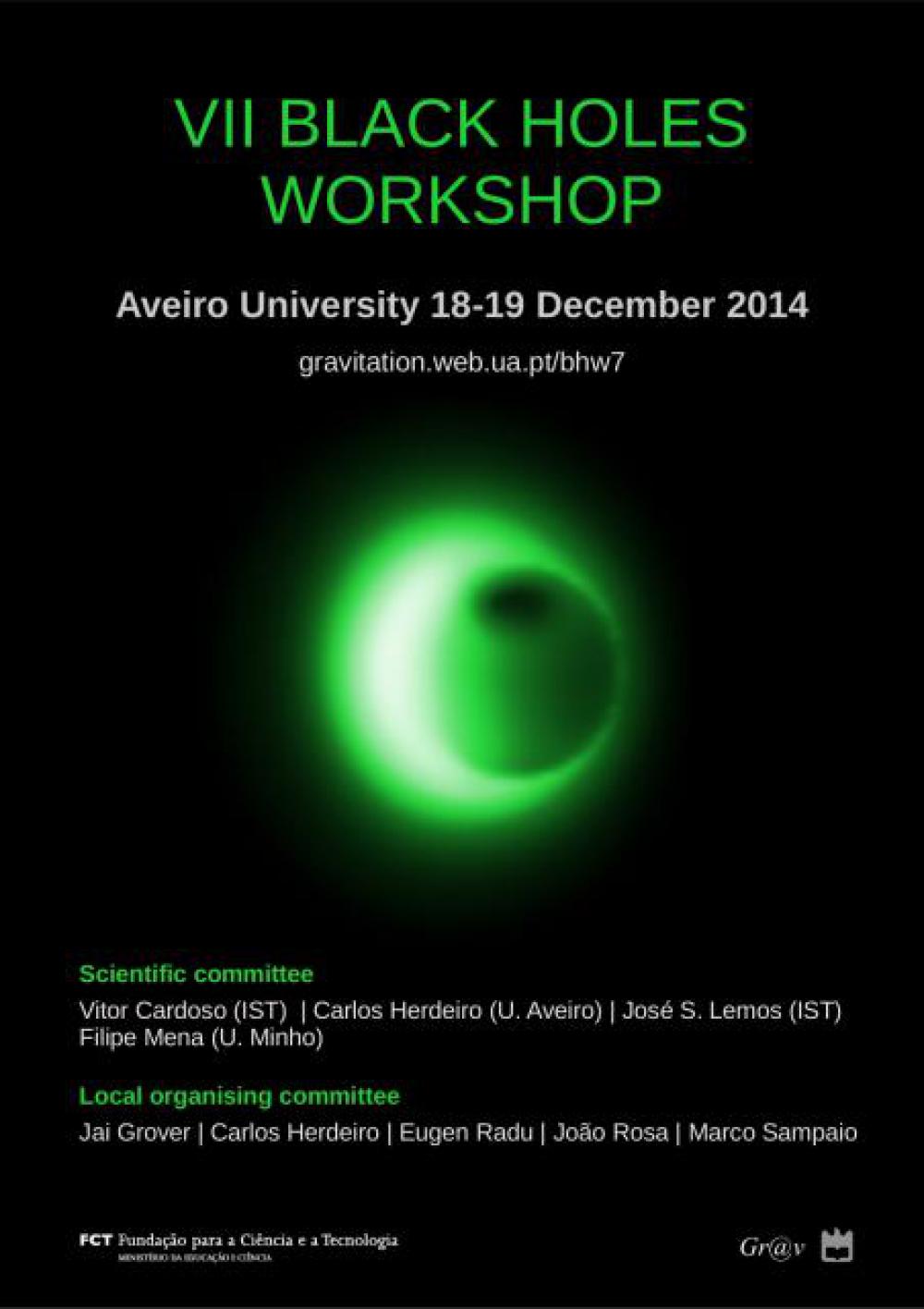
Abstract: The talk will focus on two problems: Black holes formation by particle collisions in quantum physics.The approach which will be presented is based on constructing a horizon wave-function which yields the probability of finding a black hole horizon of a certain radius centered around the source.
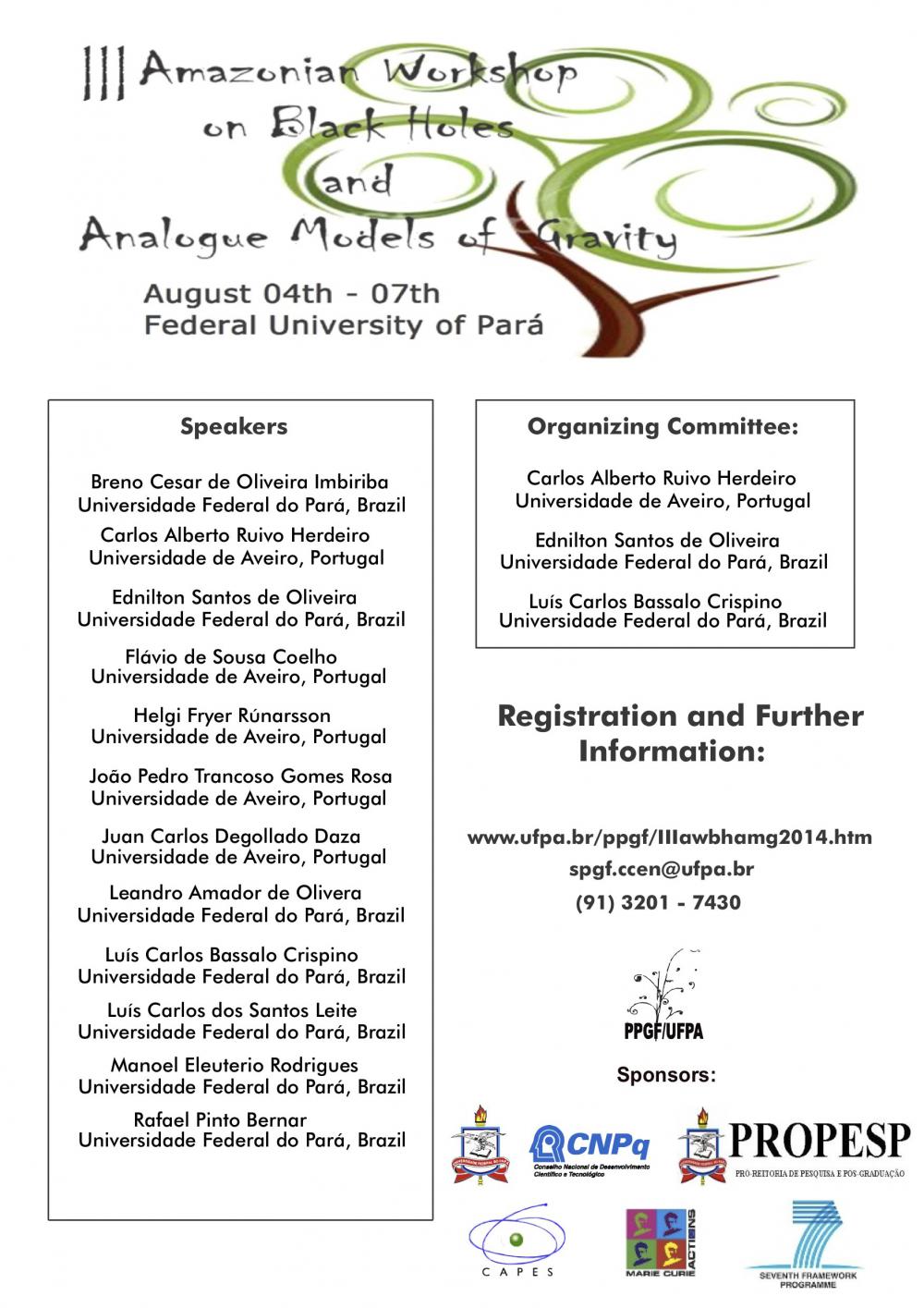
The III Amazonian workshop on black holes and analogue models of gravity will take place in UFP, Belém do Pará, Brazil, from 4-7 August 2014. This is a satellite workshop of the IRSES Marie Curie action on "Numerical Relativity and High Energy Physics", of which the U. Aveiro and UFP are both partners.
See the media coverage by the UFPA press here.
Abstract: The gauge/gravity duality has been used to describe so-called holographic superconductors and superfluids with the help of black holes and solitons in Anti-de Sitter space-time. In this talk, I will mainly discuss holographic superconductors and superfluids away from the probe limit, i.e. taking backreaction of the space-time into account.
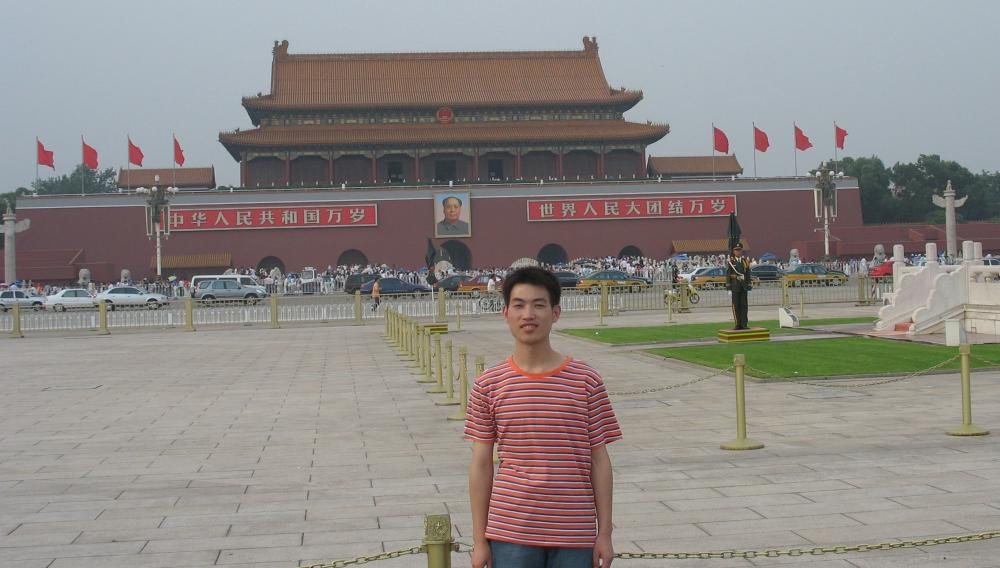
Mengjie Wang, Ph.D. student at Gr@v, has received a "Chinese Government Award for outstanding self-financed students abroad", granted by the Ministry of Education of China. Congratulations Mengjie!